Discord at 9PM Sharp: How Anime Became America's Favorite Group Activity
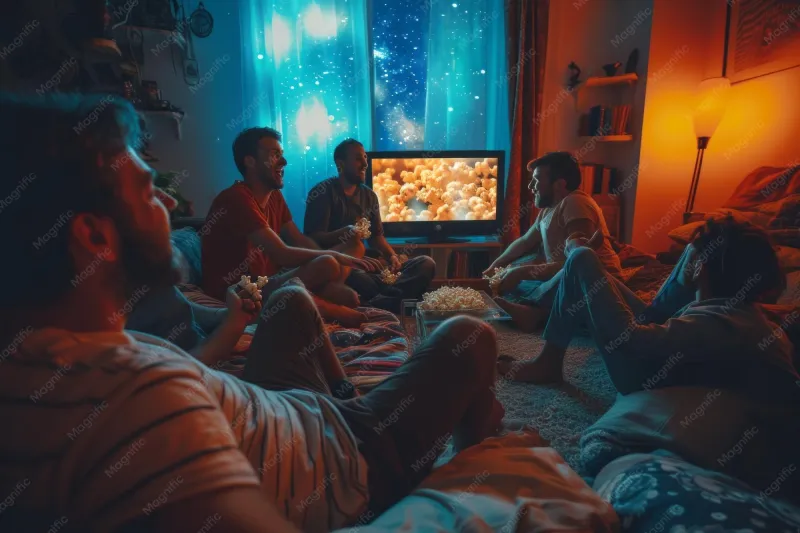
Photo: friends watching movie together living room laptop group excited, via img.freepik.com
Ten years ago, the stereotype of the American anime fan was someone watching alone, headphones on, maybe embarrassed about it. That person still exists. But increasingly they're also in a 40-person voice channel arguing about whether a character survived the latest episode, and on Saturday they're at a theater watching the season finale with strangers who scream at the same moments they do.
Anime didn't just get popular in the US. It got communal — in ways that look less like fan culture and more like a bowling league with better soundtracks.
The Watch Party Went Digital and Never Left
The mechanics are simple: someone hosts a screen-share on Discord, drops a link, and a rolling crowd shows up weekly like it's a sitcom's Thursday night slot. What keeps people coming back isn't the show alone. It's the live commentary — the mutual screaming when a plot twist lands, the running jokes that develop over weeks, the friend who always predicts the ending wrong.
Ask around in any big anime Discord and you'll hear the same story: someone moved to a new city, didn't know anybody, joined a server for a show they liked, and now has a group chat that's survived three different series together. The show is the excuse. The group is the point.
The Theater Finale Is the New Midnight Premiere
Anime distributors figured out something Hollywood took longer to grasp: fans don't just want to see the content, they want to react to it together. Theatrical screenings of season finales and compilation films now routinely sell out in US markets — not because the movie is scarce, but because the room is part of the product.
There's a specific energy to a packed theater where half the audience has read the manga and keeps vibrating in their seats. It's the comic-con panel experience, but local, affordable, and monthly.
And then there's the bar scene. Anime trivia nights have spread from LA and NYC conventions to neighborhood breweries in Ohio and Texas. Questions range from easy ("name this opening theme") to unhinged ("rank these side characters by canonical birthday"). The crowd skews older than you'd expect — 25-to-40, drinks in hand, deeply competitive.
Building Your Own Crew, Step by Step
If your anime consumption is currently a solo activity and you'd like that to change, here's the realistic path:
- Pick a server, not a platform. Search Disboard or Reddit's anime communities for servers organized around shows airing right now — seasonal anime gives a group a built-in weekly rhythm.
- Show up consistently before expecting friendship. Like any recurring event, week three is when people start recognizing your takes.
- Move it offline when it's ready. Local anime clubs meet at libraries and community centers more often than people realize. Check Meetup, or your nearest anime convention's Facebook page — cons are where regional groups recruit.
- Host something low-stakes. A monthly watch night where everyone brings snacks beats an ambitious convention trip as a first event. Add a trivia round if you want an icebreaker that does the work for you.
- Try a con day-trip with the group. Smaller regional conventions are cheap, weird, and perfect bonding experiences.
The Book Club Comparison Isn't a Joke
Book clubs survived because they combined culture with obligation — a reason to see people and something to talk about. Anime watch parties hit the same formula with better attendance, because the shared media refreshes weekly and nobody pretends they finished the book.
The streaming era was supposed to make watching TV lonelier. For anime fans in the US, it did the opposite.