Still Frames, Loud Feelings: Why Anime's Quietest Moments Are Hitting Harder Than Any Plot Twist
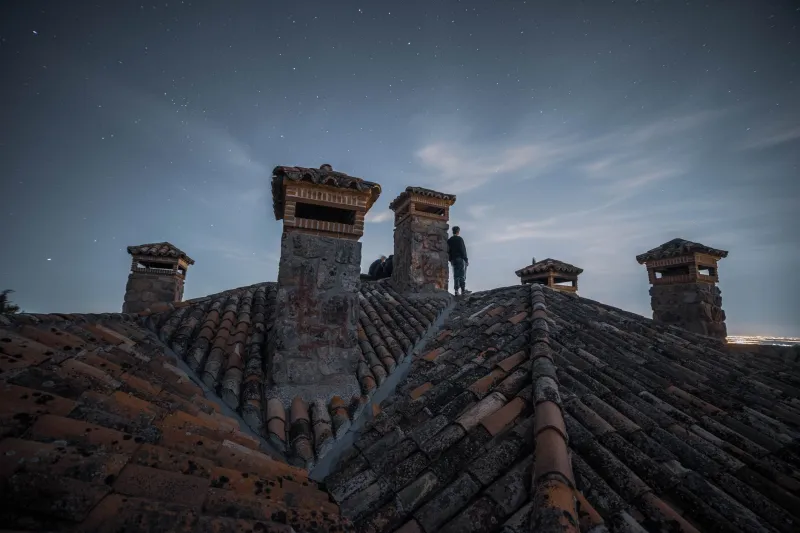
Somewhere between a season finale reveal and a villain monologue, something shifted. Ask anime fans on Reddit, TikTok, or in any Discord server what scene from the last season they keep coming back to, and a surprising number of them won't name the big fight. They'll describe a character sitting alone on a rooftop. A shot of clouds drifting past a telephone wire. Someone staring at the stars without saying a single word.
These are the moments that are winning. And honestly? It makes complete sense.
The Scene That Doesn't Need to Happen
There's a specific type of anime moment that technically doesn't advance the plot. The protagonist isn't learning anything new. Nobody's backstory is being revealed. The episode could have cut it entirely and the story would be fine. But it's there — a long, unhurried shot of the night sky, a character breathing in the cold air on a school rooftop, cicadas in the background, maybe a single piano note.
Fans used to call these "filler-adjacent." Now they're calling them their favorite parts.
This isn't an accident, and it's not just nostalgia for the slower pacing of older anime. Something more intentional is happening here, both in how these scenes are being crafted and in why viewers are responding to them the way they are.
Pacing as a Love Language
Anime has always understood that silence communicates. But the current generation of fans — particularly Gen Z viewers in the US who grew up on algorithmic content designed to hold attention every three seconds — seems to be actively seeking out the opposite of that.
When a scene slows down and just breathes, it feels radical. It feels like the show is trusting you. And in an entertainment landscape where everything is competing for your dopamine, being trusted with a quiet moment feels almost intimate.
Shows like Mushishi, March Comes in Like a Lion, and A Silent Voice built entire reputations on this kind of atmospheric restraint. But even action-heavy series have caught on. The moments fans clip from Demon Slayer aren't always the jaw-dropping animation sequences — sometimes it's Tanjiro standing still in the snow, looking up. Sometimes it's just the sky.
Why the Sky, Specifically?
It's worth asking why sky-gazing has become such a consistent shorthand for emotional depth in anime. There's obviously a cultural thread here — the Japanese aesthetic concept of ma (間), the intentional use of negative space and pause, runs deep in the medium. But for American fans engaging with these scenes, the appeal might be working on a slightly different level.
The sky is the one thing that doesn't require context. You don't need to know a character's full backstory to understand what it means when they look up at stars and go quiet. It's universal. It bypasses the lore and the worldbuilding and hits something more immediate — a feeling of smallness, of longing, of being present in a moment that's bigger than your problems.
For a generation dealing with ambient anxiety, doomscrolling habits, and the constant pressure of being perceived online, that feeling is genuinely hard to find. Anime is serving it up for free, and fans are starving for it.
The TikTok Clip That Tells the Story
Look at what actually goes viral in anime fan spaces these days. Yes, there are compilation videos of epic fights and reaction clips to shocking plot twists. But scroll a little deeper and you'll find something else performing just as well: soft edit videos. Quiet scene compilations. "Comfort anime" content set to lo-fi music, where someone has stitched together thirty seconds of a character looking at the moon with a caption that just says "this is everything."
These videos rack up hundreds of thousands of views. The comments are full of people saying they've watched it fifteen times. That they put it on when they can't sleep. That it made them feel less alone.
That's not the response you get from a plot twist. That's something different entirely.
Mindfulness in Disguise
Here's a slightly uncomfortable reframe: are anime fans accidentally practicing mindfulness through these scenes?
Mindfulness apps are a multi-billion dollar industry in the US right now, largely because people are desperately trying to find ways to slow down their nervous systems. And yet a significant chunk of Gen Z — a demographic famously skeptical of wellness culture — is finding something similar by watching animated teenagers stare at the sky for forty-five seconds.
The mechanism isn't that different. You're being invited to stop. To observe. To sit with a feeling instead of rushing past it. The fact that it's happening inside a story, with characters you care about, might actually make it more effective than a guided breathing exercise from an app.
When you're emotionally invested in a character, their stillness becomes your stillness. You breathe with them. You look up with them. You're not performing mindfulness — you're just watching anime, and it's happening anyway.
What Creators Are Getting Right
The best anime directors working today understand that restraint is a skill. Makoto Shinkai built a career on it — his films are famous for lingering on trains, on light through leaves, on the space between people who haven't said what they mean yet. Naoko Yamada's work (A Silent Voice, The Colors Within) treats silence as dialogue. Even in longer-running series, the directors who earn the most devoted fanbases tend to be the ones who know when to stop and let a scene exist without justifying itself.
For US fans used to prestige TV that rarely lets a scene breathe without scoring it aggressively or cutting away too soon, this approach can feel almost foreign. And then, quickly, it feels like exactly what was missing.
The Rooftop as Sacred Space
If you wanted to map the emotional geography of anime, rooftops would be significant territory. They're where characters go when they have nowhere else to go. They're liminal — between the world below and the sky above, between what's been said and what can't be. A character on a rooftop is a character in transition, and the sky above them is infinite possibility or infinite weight, depending on the scene.
Fans have picked up on this. "Rooftop scene" has become its own emotional shorthand in fan communities. It signals: something real is about to happen, or something real just did, and we're going to sit with it instead of running from it.
That's a beautiful thing for a medium to offer. And the fact that viewers are gravitating toward it so strongly right now feels less like a trend and more like a response — to the pace of the world, to the noise, to the relentless demand to feel something bigger and faster and louder.
Sometimes the sky is enough. Sometimes the quiet is the point. And right now, more than ever, anime fans seem to know exactly what they need when they press play.